Best Way to Send Money from Norway to Sri Lanka

Because banks shouldn't hide your money in spreads.
We expose the real cost of every transfer — the spread, the fees, the delivery time — and rank providers by what actually lands in your recipient's account. No sponsored ordering. Ever.
Which provider is cheapest to send money from Norway to Sri Lanka in 2026?
Hover any card to see exactly what it costs you.




How has the NOK/LKR exchange rate changed recently?
vs Traditional Banks
You save up to LKR 17985
on a NOK 10,800 transfer
Wise
BEST RATEBank of America
+5% markup + $35 wire fee
Wells Fargo
+4.5% markup + $25 wire fee
Sending NOK to LKR is straightforward once you know the steps. Skip Norwegian banks, use a digital provider like Wise or Remitly, and route through a licensed bank to capture Sri Lanka's IWR bonus on top of your exchange rate.
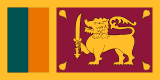
In Sri Lanka, recipients can access funds directly at Bank of Ceylon, the country's largest financial institution. By using WorldRemit instead of a traditional bank wire, your recipient gets approximately 1,450 LKR more on a $1,000 transfer — because digital providers pass the real exchange rate directly. Worth knowing about the local currency: Sri Lanka's Rs5,000 rupee note carries the Lion Flag in gold — the lion's sword signifies sovereignty and the courage of the Sinhala people.
Our verdict: Use a digital provider like Wise for the tightest rate and route through a licensed bank to claim the LKR 10 per USD IWR incentive.
Step 1: Understand the NOK to LKR Corridor Before You Start
Before initiating your first transfer, get familiar with this route. The Norway-to-Sri Lanka corridor primarily serves Sri Lankan expats working in Oslo, Bergen, and Stavanger sending funds home to family, plus Norwegian retirees and travelers supporting long stays in Colombo or Kandy. Volumes are modest compared to Gulf-to-Sri Lanka routes, which means you must shop around — not every provider prioritizes this lane, and rates can vary by 5% between options on the same day.
Step 2: Learn How Hidden Fees Work
This is the single most important step. Money transfers cost you in two places, and most beginners only see one of them.
- The flat fee — clearly displayed, usually NOK 0–80 per transfer.
- The exchange rate markup — hidden inside the rate itself, typically 1–6% worse than the real mid-market rate you see on Google.
Always check the mid-market NOK/LKR rate first (search "NOK to LKR" on Google), then compare it to the rate your provider quotes. The difference is your true cost. A "zero fee" transfer with a 4% markup is far more expensive than a 50 NOK fee with a 0.5% markup.
Step 3: Choose a Digital Provider Over Your Bank
Skip DNB, Nordea, or Sparebanken for this corridor. Norwegian banks typically charge NOK 50–200 in fees and add 3–8% to the exchange rate, eating significantly into the amount your recipient receives. Use a digital specialist instead.
- Wise — usually the tightest rate, transparent fee structure, ideal for amounts above NOK 5,000.
- Remitly — strong on Sri Lanka delivery networks, offers promotional rates for first transfers.
- Revolut — convenient if you already hold a multi-currency account in Norway.
- WorldRemit — broad payout options including cash pickup across Sri Lanka.
Step 4: Pick Your Delivery Method
Decide where the money lands. The two largest receiving banks in Sri Lanka are Bank of Ceylon and Commercial Bank of Ceylon, and most digital providers can deposit directly into accounts at either institution. Bank deposit is the cheapest and most secure option. Cash pickup at agent locations is faster but typically costs more. Mobile wallet delivery is gaining traction for smaller amounts. Ask your recipient which option works best for them before you set up the transfer.
Step 5: Choose Transfer Speed
Match speed to urgency.
- Instant or same-day (minutes to a few hours) — use for emergencies, medical bills, or last-minute family needs. Costs slightly more.
- Economy (1–3 business days) — use for routine support, rent, or planned remittances. Saves on fees.
For non-urgent transfers, economy almost always makes sense. The savings on a NOK 10,000 transfer can fund a meal in Colombo.
Step 6: Take Advantage of the Worker Remittance Incentive
Sri Lanka offers an Incentive for Worker Remittances (IWR) — an additional LKR 10 per USD for transfers routed through licensed banks. This is real money paid on top of the exchange rate, so route your transfer through a provider that uses licensed banking partners and confirms IWR eligibility on the receipt. Even on a modest USD 500 equivalent, that is an extra LKR 5,000 in your recipient's pocket.
Step 7: Know the Regulatory Basics
Standard banking regulations apply for sending from Norway to Sri Lanka. You will need to verify your identity (passport or BankID) on first use, and large transfers above NOK 100,000 may trigger additional source-of-funds questions under Norwegian AML rules. Keep documentation handy and there is nothing else to worry about.
Step 8: Time It Right and Set Alerts
Follow these practical habits.
- Transfer mid-week — Tuesday to Thursday — when interbank liquidity is deepest and rates tightest. Avoid weekends and late Fridays.
- Batch larger amounts — most providers offer better rates above NOK 10,000–20,000 thresholds, so consolidating two monthly transfers into one quarterly transfer can save real money.
- Set rate alerts in Wise or Revolut so you can lock in favorable NOK/LKR moves rather than guessing.
- Always send a small test transfer (NOK 500) the first time you use a new provider to confirm the recipient details work end-to-end.