
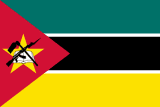
Best Way to Send Money from Japan to Mozambique

Because banks shouldn't hide your money in spreads.
We expose the real cost of every transfer — the spread, the fees, the delivery time — and rank providers by what actually lands in your recipient's account. No sponsored ordering. Ever.
Which provider is cheapest to send money from Japan to Mozambique in 2026?
Hover any card to see exactly what it costs you.




How has the JPY/MZN exchange rate changed recently?
vs Traditional Banks
You save up to MZN 2685
on a JPY 149,300 transfer
Wise
BEST RATEBank of America
+5% markup + $35 wire fee
Wells Fargo
+4.5% markup + $25 wire fee
Sending yen to metical doesn't have to mean losing 5% to a bank. Digital providers like Wise, Remitly, and WorldRemit cut fees, show real rates, and deliver to BCI, Millennium BIM, or mobile wallets like M-Pesa in minutes.
In Mozambique, recipients can access funds directly at BCI — Banco Comercial e de Investimentos, the country's largest financial institution. By using WorldRemit instead of a traditional bank wire, your recipient gets approximately 17 MZN more on a $1,000 transfer — because digital providers pass the real exchange rate directly. Worth knowing about the local currency: Mozambique's 1,000 metical note portrays Cahora Bassa Dam, one of Africa's largest hydroelectric installations.
Our verdict: For most JPY to MZN transfers in 2026, Wise gives the best mid-market rate while WorldRemit wins if your recipient needs cash pickup or mobile wallet delivery.
Why send money from Japan to Mozambique with a digital provider in 2026?
The JPY to MZN corridor is small but steady. Most senders are Japanese-based Mozambican students, contract workers in manufacturing hubs around Nagoya and Yokohama, and NGO staff supporting families back home. Japanese megabanks like MUFG and SMBC technically handle the transfer, but they route through two or three correspondent banks before the money reaches Maputo. Each hop skims fees. A digital provider cuts the middlemen, settles in metical faster, and shows you the real cost upfront. If you send more than ¥20,000 a month on this route, the bank route is simply not competitive in 2026.
What are the transfer fees from Japan to Mozambique in 2026?
Watch two numbers: the flat fee and the exchange rate markup. Japanese banks charge ¥3,000 to ¥7,500 per international wire and pad the FX rate by 4-6%. Digital providers flip that: low flat fees (often ¥500-¥1,500) and a transparent margin of 0.5-2%. The markup is where banks hide most of the damage — a "no fee" bank promo on this corridor usually means a worse rate that costs you triple what a flat fee would. Always compare the final MZN amount your recipient receives, not the headline fee.
Which provider offers the best JPY to MZN exchange rate?
Wise typically wins on transparency — mid-market rate plus a visible margin around 0.6%. Remitly competes hard on first-transfer promos and usually beats Wise on the initial send, then drifts higher on repeats. Revolut is strong if you already hold a JPY balance and want to pre-convert when rates spike in your favor. WorldRemit covers Mozambique well and offers cash pickup, which the others do not. Versus an SMBC or MUFG outbound wire, expect savings of 3-8% on the total cost, depending on the amount. For sends above ¥500,000, Wise's tiered pricing usually pulls ahead.
How long does it take to send money from Japan to Mozambique?
Instant or near-instant transfers are available through Remitly Express and WorldRemit when the recipient picks up cash or uses a mobile wallet — usually under 30 minutes. Bank deposits to a Mozambican account take 1-3 business days with Wise and Remitly Economy. Japanese bank wires are the slowest: 3-5 business days, sometimes longer if the correspondent bank flags compliance review. Use the fast option for emergencies and the economy tier for rent or tuition, where saving 1-2% matters more than speed.
Where does the money land in Mozambique?
The two dominant local banks are Banco Comercial e de Investimentos (BCI) and Millennium BIM — between them they cover most retail accounts in Mozambique. Mobile wallets matter even more for last-mile delivery: M-Pesa (Vodacom) and e-Mola (Movitel) reach recipients in rural provinces where bank branches do not exist. Remittances play an important role in Mozambique's economy, supporting household consumption and small businesses, so wallet operators have built reliable cash-out networks across the country. Cash pickup through agent networks is also widely available in Maputo, Beira, and Nampula. Always confirm whether your recipient prefers a bank deposit, a wallet top-up, or cash — the choice changes which provider gives you the best deal.
What taxes or regulations apply to JPY to MZN transfers?
Standard banking regulations apply for sending from Japan to Mozambique. Japan's Foreign Exchange and Foreign Trade Act requires reporting on transfers above ¥30 million, and licensed remittance providers handle the paperwork automatically. On the Mozambican side, the Banco de Moçambique oversees inbound flows but personal remittances are not taxed for the recipient. Keep your transfer receipts for at least a year — useful if your recipient ever needs to prove source of funds for a property purchase or a business loan.
What is the best time to send JPY to Mozambique to get the best rate?
The JPY/MZN pair is illiquid, so rates move when the Bank of Japan signals policy shifts or when commodity prices swing (Mozambique exports aluminum and gas, which moves the metical). Set rate alerts on Wise or Revolut and send when JPY strengthens against the dollar — MZN tracks USD closely. For amounts above ¥300,000, splitting into two sends across a week can smooth out volatility. Avoid Friday afternoon sends in Japan; weekend FX spreads widen and you will pay for it.