
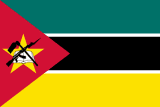
Best Way to Send Money from Hong Kong to Mozambique

Because banks shouldn't hide your money in spreads.
We expose the real cost of every transfer — the spread, the fees, the delivery time — and rank providers by what actually lands in your recipient's account. No sponsored ordering. Ever.
Which provider is cheapest to send money from Hong Kong to Mozambique in 2026?
Hover any card to see exactly what it costs you.




How has the HKD/MZN exchange rate changed recently?
vs Traditional Banks
You save up to MZN 3140
on a HKD 7,700 transfer
Wise
BEST RATEBank of America
+5% markup + $35 wire fee
Wells Fargo
+4.5% markup + $25 wire fee
Sending HKD to MZN through a traditional bank can cost 6-9% in hidden markups, while digital providers like Wise and Remitly compress that to under 1.5%. This guide breaks down fees, speed, and delivery options to maximize what your recipient actually receives in Mozambique.
In Mozambique, recipients can access funds directly at BCI — Banco Comercial e de Investimentos, the country's largest financial institution. By using Revolut instead of a traditional bank wire, your recipient gets approximately 340 MZN more on a $1,000 transfer — because digital providers pass the real exchange rate directly. Worth knowing about the local currency: Mozambique's 1,000 metical note portrays Cahora Bassa Dam, one of Africa's largest hydroelectric installations.
Our verdict: For transfers above HKD 5,000, Wise delivers the lowest total cost on the HKD-MZN corridor, saving 3-6% versus Hong Kong banks.
Why send money from Hong Kong to Mozambique with a digital provider in 2026?
The HKD-MZN corridor is a low-volume but high-margin route, which means traditional banks routinely charge 6-9% above mid-market on conversions and pile on flat fees of HKD 150-300 per wire. Digital providers compress that spread to under 1.5%, delivering net savings of 3-8% on transfers above HKD 5,000. The typical sender on this corridor is a Hong Kong-based professional supporting family in Maputo, Beira, or Nampula, an importer paying local suppliers, or an NGO worker funding project costs. For amounts between HKD 2,000 and HKD 50,000, switching from a bank wire to a digital fintech translates into HKD 120-2,400 retained per transaction.
What are the transfer fees from Hong Kong to Mozambique in 2026?
Total cost on this route splits into two layers: a visible flat fee (HKD 25-90 for digital providers, HKD 150-400 for banks) and a hidden exchange-rate markup. The markup is where 70-85% of your true cost sits. HSBC and Standard Chartered typically apply a 5-7% spread on HKD to MZN, while specialists like Wise quote within 0.45-0.85% of the mid-market rate. To audit any quote, divide the MZN you'd receive by the HKD you'd send, then compare against the Google or Reuters mid-market rate — anything above a 2% gap is overpriced for this corridor.
Which provider offers the best HKD to MZN exchange rate?
Wise consistently leads on transparency, charging a flat 0.45-0.65% conversion fee with no markup, which on a HKD 10,000 transfer saves roughly HKD 500-700 versus HSBC. Remitly and WorldRemit prioritize speed and cash-pickup networks, typically pricing 1.2-1.8% above mid-market — competitive for amounts under HKD 3,000 where flat fees dominate. Revolut Premium users get interbank rates on weekdays but pay a 1% surcharge on weekends. For transfers above HKD 20,000, Wise's percentage-based fee structure delivers the lowest absolute cost, often beating banks by 4-6% in total value received.
How long does it take to send money from Hong Kong to Mozambique?
Delivery times split into three tiers. Express transfers via Remitly or WorldRemit settle in 10 minutes to 2 hours, ideal for emergencies but priced 0.5-1% higher. Standard digital transfers (Wise, Revolut) land in 1-2 business days at the lowest cost. Bank wires via SWIFT take 3-5 business days and often pass through 2-3 correspondent banks, each potentially deducting USD 15-40 in lifting fees. If your recipient doesn't need immediate access, the economy option saves 1-2% of the transfer value.
Where does the money land in Mozambique?
Remittances play an important role in Mozambique's economy, particularly in rural provinces where they supplement subsistence agriculture and small commerce. Funds typically deposit into accounts at Banco Internacional de Moçambique (BIM/Millennium bim) or Standard Bank Moçambique, the two dominant local institutions covering over 60% of the country's banked population. Mobile wallet penetration is equally critical: M-Pesa (Vodacom) and e-Mola (Movitel) deliver funds directly to a phone number, ideal for recipients outside Maputo. Cash pickup via Western Union and MoneyGram agents remains widely used in smaller towns where bank branches are scarce.
What taxes or regulations apply to HKD to MZN transfers?
Standard banking regulations apply for sending from Hong Kong to Mozambique. Hong Kong has no exchange controls, so outbound transfers face no source-side tax, though the HKMA requires providers to verify identity on transactions above HKD 8,000. On the receiving side, Banco de Moçambique mandates currency declarations for inbound transfers exceeding USD 5,000, and personal remittances are not subject to income tax in Mozambique. Business-purpose transfers may require supporting invoices to clear customs and central-bank review, which can add 1-3 business days.
What is the best time to send HKD to Mozambique to get the best rate?
The HKD-MZN cross rate is driven primarily by USD-MZN movements, since HKD is pegged to USD within a 7.75-7.85 band. Mozambique's metical tends to weaken 2-4% during quarterly debt-service periods (March, June, September, December), which actually improves the HKD-MZN rate for senders. Setting a rate alert with Wise or Revolut for a 1.5% improvement above current levels typically triggers within 3-6 weeks. For transfers above HKD 30,000, splitting into two tranches over 30 days mitigates timing risk and often captures a 0.8-1.2% blended improvement.