
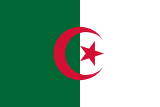
Best Way to Send Money from Finland to Algeria

Because banks shouldn't hide your money in spreads.
We expose the real cost of every transfer — the spread, the fees, the delivery time — and rank providers by what actually lands in your recipient's account. No sponsored ordering. Ever.
Which provider is cheapest to send money from Finland to Algeria in 2026?
Hover any card to see exactly what it costs you.




How has the EUR/DZD exchange rate changed recently?
vs Traditional Banks
You save up to DZD 11265
on a EUR 900 transfer
Wise
BEST RATEBank of America
+5% markup + $35 wire fee
Wells Fargo
+4.5% markup + $25 wire fee
Sending money from Finland to Algeria is faster and cheaper than ever in 2026 — but only if you skip the traditional bank route. Digital providers like Wise and Remitly offer mid-market EUR to DZD exchange rates with transparent fees, saving senders 3–8% compared to Finnish banks. This guide walks you through every step: choosing a provider, understanding fees, and getting money to your recipient in Algeria as quickly as possible.
In Algeria, recipients can access funds directly at BEA — Banque Extérieure d'Algérie, the country's largest financial institution. By using Revolut instead of a traditional bank wire, your recipient gets approximately 6,460 DZD more on a $1,000 transfer — because digital providers pass the real exchange rate directly. Worth knowing about the local currency: Algeria's 2,000 dinar note portrays the Casbah of Algiers, a UNESCO World Heritage medina whose street layout has been unchanged since the 16th century.
Our verdict: Use Wise for the best EUR to DZD exchange rate, or Remitly Express when your recipient in Algeria needs funds within hours.
Why send money from Finland to Algeria with a digital provider in 2026?
Whether you're supporting family in Algiers, covering university fees, or paying for property, the Finland-to-Algeria corridor is busier than many people realize. Remittances play an important role in Algeria's economy, with diaspora communities across Europe — including Finland — regularly sending funds home to supplement household incomes. The problem is that traditional Finnish banks route these transfers via slow SWIFT networks, applying opaque EUR-to-DZD conversion rates and charging flat wire fees on top. Digital providers like Wise, Remitly, and WorldRemit bypass those intermediaries entirely, offering transparent pricing and significantly faster delivery that makes the old bank route hard to justify in 2026.
What are the transfer fees from Finland to Algeria in 2026?
You're always paying two costs, not one: a visible transfer fee and a hidden exchange rate markup. Finnish banks typically apply a 3–5% markup above the mid-market EUR/DZD rate, plus a flat SWIFT wire fee of €15–€30 per transaction — a combination that quietly erodes the amount your recipient sees. Digital providers are far more transparent. Wise charges a small percentage fee (usually 0.5–1.5% depending on the amount) and applies the real mid-market rate with no additional markup. Remitly and WorldRemit often advertise zero fees on first transfers, but always read the exchange rate line — that's where the margin is embedded. Before confirming any transfer, enter the amount into a comparison tool like Monito to calculate the full cost end-to-end.
Which provider offers the best EUR to DZD exchange rate?
Wise consistently prices EUR-to-DZD closest to the mid-market benchmark, making it the strongest choice when maximizing what your recipient receives matters most. Remitly competes on speed and regularly runs promotional rates for first-time senders, so it's worth checking both. Revolut can work for in-app currency exchanges on weekday market hours, but its DZD coverage is more limited than dedicated remittance services. WorldRemit is a solid option when your recipient prefers cash pickup over a bank deposit. Across the board, routing your transfer through any of these digital providers instead of a Finnish bank saves 3–8% — that's €15–€40 more in your recipient's hands on a standard €500 transfer.
How long does it take to send money from Finland to Algeria?
Speed varies by provider and the tier you select. Remitly's Express option typically delivers within minutes to a few hours for bank deposits. Wise usually completes EUR-to-DZD transfers in 1–3 business days, depending on how quickly the receiving bank in Algeria processes the credit. Economy tiers on Remitly take 3–5 business days but cost meaningfully less — the right choice for predictable monthly support. For urgent transfers tied to rent, a medical bill, or an emergency, pay for the Express tier. One practical rule: always initiate transfers on Tuesday through Thursday. Transfers sent on Friday afternoon or over a weekend often don't begin processing until Monday morning.
Where does the money land in Algeria?
Most digital providers deposit funds directly into Algerian bank accounts. The most widely supported receiving banks are Banque Nationale d'Algérie (BNA) and Crédit Populaire d'Algérie (CPA), both state-owned institutions with extensive branch networks across urban and rural areas. Private options including Société Générale Algérie and BNP Paribas El Djazaïr are also accepted by several providers. For recipients without a traditional bank account, Algérie Poste's BaridiMob mobile wallet is an increasingly practical route — funds land in a CCP postal account and are accessible immediately via smartphone. Some providers also support cash pickup at agent locations in Algiers, Oran, and Constantine, useful if your recipient lives in a smaller town with limited banking infrastructure.
What taxes or regulations apply to EUR to DZD transfers?
For personal transfers — family support, gifts, school fees — there is no special tax on the Finnish side. Standard banking regulations apply for sending from Finland to Algeria, meaning your provider will verify your identity (KYC) and may ask you to document the purpose of larger transfers, typically above €1,000–€2,000. On the Algerian side, recipients generally do not pay income tax on personal remittances. Be aware that Algeria has currency controls: the dinar is not freely convertible, so received funds stay in DZD. Always confirm your chosen provider holds a valid EU or Finnish financial services license (issued by Finanssivalvonta or equivalent) before initiating a transfer.
What is the best time to send EUR to Algeria to get the best rate?
A few simple habits can consistently stretch your euros further without much effort. Follow these steps each time you send:
- Set a rate alert on Wise or Remitly for your target EUR/DZD level — you'll get a notification the moment the rate hits your threshold.
- Send mid-week, ideally Tuesday to Thursday, when currency markets are most liquid and providers tend to offer tighter spreads.
- Avoid Finnish and Algerian public holidays: banks on both ends are closed, and providers often widen their margins on those days.
- Consolidate transfers — sending €400 once costs less in total fees than sending €100 four times, since percentage fees drop at higher amounts.
- Lock in a favorable rate the moment you see it rather than waiting for a better one that may not arrive before your deadline.