Best Way to Send Money from Denmark to Sri Lanka

Because banks shouldn't hide your money in spreads.
We expose the real cost of every transfer — the spread, the fees, the delivery time — and rank providers by what actually lands in your recipient's account. No sponsored ordering. Ever.
Which provider is cheapest to send money from Denmark to Sri Lanka in 2026?
Hover any card to see exactly what it costs you.




How has the DKK/LKR exchange rate changed recently?
vs Traditional Banks
You save up to LKR 17935
on a DKK 6,900 transfer
Wise
BEST RATEBank of America
+5% markup + $35 wire fee
Wells Fargo
+4.5% markup + $25 wire fee
Sending money from Denmark to Sri Lanka in 2026 is faster and cheaper than ever, but only if you avoid bank markups and use the right digital provider. This step-by-step guide shows you how to get the best DKK to LKR rate, claim the Sri Lankan remittance bonus, and deliver funds directly to a Bank of Ceylon or Commercial Bank account.
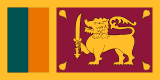
In Sri Lanka, recipients can access funds directly at Bank of Ceylon, the country's largest financial institution. By using Revolut instead of a traditional bank wire, your recipient gets approximately 2,140 LKR more on a $1,000 transfer — because digital providers pass the real exchange rate directly. Worth knowing about the local currency: Sri Lanka's Rs5,000 rupee note carries the Lion Flag in gold — the lion's sword signifies sovereignty and the courage of the Sinhala people.
Our verdict: Use Wise or Remitly with delivery to a Bank of Ceylon or Commercial Bank of Ceylon account to capture the LKR 10 per USD IWR incentive and beat Danish bank rates by 3-8%.
Step 1: Understand the DKK to LKR Corridor Before You Start
The Denmark-to-Sri Lanka remittance route is dominated by Sri Lankan professionals working in Copenhagen, Aarhus, and Odense — many in healthcare, IT, and hospitality — sending money home to family for living expenses, education, and property purchases. Before sending, check the mid-market DKK/LKR rate on Google or XE and write it down. This is your benchmark: every provider you compare must be measured against this number, not against each other.
Step 2: Spot the Hidden Fees (This Is Where Most Senders Lose Money)
There are two costs in every transfer: the flat fee (visible) and the exchange rate markup (hidden). Banks like Danske Bank or Nordea may advertise a low DKK 40 fee but bake a 3-5% markup into the rate, costing you far more than a provider charging DKK 50 with a near-mid-market rate. Always calculate the total LKR your recipient will receive — that is the only number that matters.
Step 3: Choose a Digital Provider Over Your Bank
For amounts above DKK 1,000, digital specialists almost always win. Compare these four:
- Wise — typically the tightest spread, often within 0.5% of the mid-market rate
- Remitly — competitive Economy tier, strong promotional rates for first-time users
- Revolut — excellent if you already hold a multi-currency account in DKK
- WorldRemit — strong cash-pickup network across Sri Lanka
On a DKK 10,000 transfer, these providers commonly beat traditional Danish banks by 3-8% on the exchange rate alone. That difference can equal LKR 15,000-40,000 going into your recipient's pocket instead of the bank's.
Step 4: Pick Your Transfer Speed
Decide between instant and economy based on urgency:
- Instant (minutes to a few hours) — use for emergencies, medical bills, or last-minute school fees. Costs more but funds arrive within hours.
- Economy (1-3 business days) — use for monthly family support or planned expenses. Fees are typically 30-50% lower.
If your transfer is not urgent, always pick economy. The savings on a recurring monthly transfer add up to thousands of rupees per year.
Step 5: Choose How the Money Will Be Delivered
Bank deposit is the safest and cheapest method. The two largest receiving banks in Sri Lanka are Bank of Ceylon and Commercial Bank of Ceylon — most digital providers can deliver directly into accounts at these banks, often within the same business day. Cash pickup through agents like Cargills Bank or LOLC works for recipients without bank accounts but usually carries a higher fee. Mobile wallet delivery (eZ Cash, mCash) is fastest for small amounts.
Step 6: Take Advantage of the Sri Lankan Government Incentive
Here is a fact most senders miss: Sri Lanka offers an Incentive for Worker Remittances (IWR) — an additional LKR 10 per USD for transfers routed through licensed banks. To capture this bonus, make sure your provider settles via a licensed Sri Lankan banking partner (most reputable digital providers do) and that the funds land in a local bank account rather than a wallet. On a DKK 7,000 transfer (~USD 1,000), this alone adds LKR 10,000 to the amount your family receives.
Step 7: Check the Regulatory Side Before Pressing Send
Standard banking regulations apply for sending from Denmark to Sri Lanka. There is no special remittance tax, but transfers above DKK 100,000 (around USD 14,500) may trigger anti-money-laundering checks under Danish FSA rules — be ready to provide proof of source-of-funds, such as a payslip or bank statement. Keep all confirmation receipts for at least three years.
Step 8: Time Your Transfer for the Best Rate
Practical tips to squeeze out the last few percent:
- Set rate alerts on Wise or XE — the LKR can swing 2-3% in a week
- Avoid weekends and Danish public holidays; rates are set by Friday's close and you lose flexibility
- Send larger amounts less often — most providers reduce the percentage fee on transfers above DKK 7,500
- Avoid sending right before Sri Lankan New Year (April), when LKR demand spikes and spreads widen
Follow these eight steps and your first transfer will land safely, quickly, and with the maximum number of rupees reaching your family.