
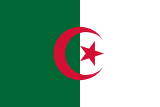
Best Way to Send Money from Austria to Algeria

Because banks shouldn't hide your money in spreads.
We expose the real cost of every transfer — the spread, the fees, the delivery time — and rank providers by what actually lands in your recipient's account. No sponsored ordering. Ever.
Which provider is cheapest to send money from Austria to Algeria in 2026?
Hover any card to see exactly what it costs you.




How has the EUR/DZD exchange rate changed recently?
vs Traditional Banks
You save up to DZD 11265
on a EUR 900 transfer
Wise
BEST RATEBank of America
+5% markup + $35 wire fee
Wells Fargo
+4.5% markup + $25 wire fee
Sending euros from Austria to Algeria? Banks quietly skim 3-8% via exchange rate markups, while digital providers like Wise, Remitly, Revolut, and WorldRemit pass on real rates with transparent fees. Here's how to pick the right one and time your transfer for maximum value.
In Algeria, recipients can access funds directly at BEA — Banque Extérieure d'Algérie, the country's largest financial institution. By using Wise instead of a traditional bank wire, your recipient gets approximately 6,480 DZD more on a $1,000 transfer — because digital providers pass the real exchange rate directly. Worth knowing about the local currency: Algeria's 2,000 dinar note portrays the Casbah of Algiers, a UNESCO World Heritage medina whose street layout has been unchanged since the 16th century.
Our verdict: For most senders, Wise delivers the best combination of mid-market rates and low transparent fees on the EUR to DZD corridor — but use Remitly if your recipient needs cash pickup.
The EUR to DZD Corridor: Who's Sending and Why
The Austria-to-Algeria money transfer route is dominated by two groups: the Algerian diaspora in Vienna, Graz, and Linz supporting families back home, and Austrian businesses paying suppliers or contractors in North Africa. Remittances play an important role in Algeria's economy, helping cover everything from monthly groceries in Algiers to school fees in Oran and medical bills in Constantine. If you're sending EUR to DZD, you're joining a steady flow of cash that genuinely matters on the receiving end — which makes getting the rate right even more important.
Hidden Fees: The Exchange Rate Trap
Here's the dirty secret of international transfers: the flat fee is rarely the real cost. The exchange rate markup is. A bank advertising "no transfer fee" can still skim 4-6% off the mid-market rate, costing you €40-60 on a €1,000 transfer without you ever seeing a line item. Always check the rate against Google's mid-market EUR/DZD before clicking send. If the provider's rate is more than 1% off the real rate, you're being charged a hidden fee — full stop.
Why Digital Providers Crush Banks
Erste Bank, Raiffeisen, and BAWAG will happily wire your euros to Algeria — and quietly take 3-8% via inflated exchange rates plus a €15-25 SWIFT fee. Digital providers obliterate that pricing. Wise uses the real mid-market rate and charges a transparent flat fee, usually under €5 for moderate amounts. Remitly markets aggressive promo rates for first transfers and excels at cash pickup options. Revolut works brilliantly if both you and recipient family members are inside its app ecosystem, with near-instant transfers during weekdays. WorldRemit offers the widest cash pickup network across Algerian cities, which matters when your recipient doesn't have a bank account.
For most senders, the math is brutal: pick any of these four over a traditional Austrian bank and you'll save 3-8% on the exchange rate alone. On a €2,000 transfer, that's €60-160 staying in your family's pocket instead of disappearing into a bank's spread.
Speed: Instant vs Economy
Standard banking regulations apply for sending from Austria to Algeria, so all legitimate providers will require recipient details and may flag larger amounts for compliance review. Within those rules, you've got speed choices. Instant transfers (under an hour) cost more — Remitly's "Express" option and Wise's instant tier add a premium. Economy transfers settle in 1-3 business days and cost less. Use instant only when it's genuinely urgent: medical emergencies, missed rent. For monthly family support, schedule the economy option a few days early and pocket the savings.
Receiving in Algeria: Banks and Cash Pickup
Your recipient's options shape your provider choice. Banque Extérieure d'Algérie (BEA) and Banque Nationale d'Algérie (BNA) are the two dominant local banks for receiving international transfers, with branches in every wilaya. Bank deposits are reliable but can take an extra 1-2 days to clear locally. Cash pickup through Western Union or MoneyGram partners — including post offices via Algérie Poste — is faster and works for unbanked recipients, but rates are typically worse. Mobile wallet adoption is still emerging in Algeria, so a bank account at BEA or BNA remains the cheapest, cleanest delivery method for recurring transfers.
Practical Tips to Squeeze Out More Value
Set rate alerts on Wise or Revolut and send when EUR/DZD spikes in your favor — the rate moves 1-3% within most months. Avoid Friday afternoons and weekends; liquidity drops and spreads widen. Batch your transfers: sending €500 once usually beats sending €100 five times because flat fees stop scaling. Many providers also have amount thresholds — Wise's percentage fee drops sharply above €1,000, so if you're close to the line, round up. Finally, keep your recipient's IBAN and identification details saved in your provider's app to avoid retyping errors that delay settlement.
Bottom line: skip the bank, pick Wise for transparency, Remitly for cash pickup, Revolut for speed inside its ecosystem, and you'll consistently land 95%+ of every euro into Algerian dinars.